Search for “Aviator Predictor” on YouTube, Telegram, or TikTok, and you will see the same promise repeated everywhere: predict the crash point, win consistently, and beat the system. These tools often show dashboards with clean charts, “live signals,” and claimed accuracy rates above 90%. For someone new to crash games, that looks convincing.
The problem is not just that these tools don’t work. It’s that they misunderstand how the game itself operates. If you don’t understand the system behind Aviator, it’s easy to believe that prediction is possible. This article breaks down the actual mechanics, what predictor tools really do, and what strategies are actually useful in practice.
How the Aviator Algorithm Actually Works
To evaluate any Aviator Predictor, you first need to understand how the crash point is generated. Aviator uses a provably fair system, which is fundamentally different from traditional game logic.
Each round is determined by:
- A server seed (generated by the platform)
- A client seed (visible or influenced by the player)
- A hash function (usually SHA-256)
These inputs are combined to generate a multiplier before the round even starts. That means the crash point already exists mathematically before you place your bet.
Why This Matters
- The result is pre-determined but hidden
- It cannot be changed after generation
- It cannot be predicted without breaking encryption
This is the same class of cryptographic function used in banking systems. There is no shortcut, no “pattern,” and no mobile app capable of reversing it in real time.
Any claim that an Aviator Predictor can “see” future crash points is fundamentally false based on how the system is designed.
What Aviator Predictor Tools Actually Do
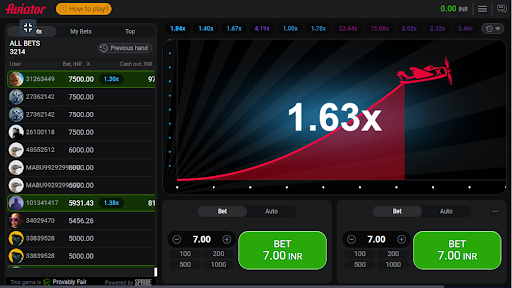
Most so-called predictor tools fall into a few predictable categories. They may look advanced, but their underlying logic is simple, and flawed.
1. Random Output Generators
These tools display random multipliers and label them as predictions. Because low multipliers (1.00x–2.00x) occur frequently, they appear “accurate” often enough to fool users.
In reality:
- They are not connected to the game server
- They generate numbers independently
- Their accuracy is coincidental, not calculated
2. Pattern-Based Systems
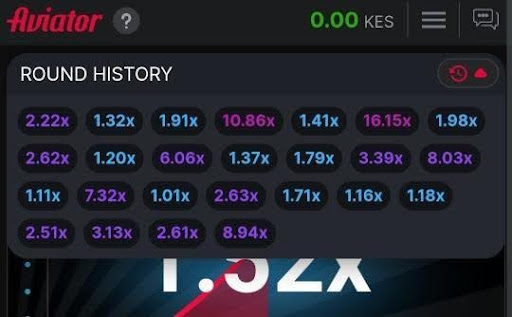
Some tools claim to analyze previous rounds and detect trends. They might show charts or sequences suggesting “cycles” in crash behavior.
The flaw here is simple:
- Each round is independent
- Previous results have zero influence on future outcomes
This is a core principle of RNG-based systems. Looking at past results to predict future ones is statistically invalid.
3. Fake “Live Signal” Groups
Telegram and WhatsApp groups often promote Aviator hack live signals. These claim to provide real-time entry and exit points.
What actually happens:
- Signals are delayed or random
- Wins are selectively posted
- Losses are ignored or deleted
Some groups also monetize through:
- Subscription fees
- Affiliate links
- Paid “VIP signals”
The business model is not based on accuracy. It’s based on volume and perception.
4. Malicious Apps and APKs
The most dangerous category involves fake apps marketed as Aviator hack tools.
These often:
- Request unnecessary permissions
- Access device data
- Install hidden scripts or trackers
Red flags include:
- Asking for contact or SMS access
- Requiring login credentials for betting accounts
- Promising “guaranteed wins”
These are not tools. They are security risks.
Why Prediction Fails: The Mathematical Reality
The idea behind an Aviator Predictor assumes that outcomes follow patterns. But in reality, the system is built specifically to avoid that.
Key properties of the system:
| Property | Impact |
| Independent rounds | No carry-over effect |
| Cryptographic hashing | No reverse calculation |
| Pre-generated results | No real-time manipulation |
| Public verification | Transparent but not predictable |
Even if you recorded 10,000 previous rounds, you would gain zero predictive advantage over the next one.
This is not a limitation of tools, it is a design feature of the game itself.
The Psychological Trap of Using Predictors
Even when predictor tools are not harmful, they create a different kind of problem: false confidence.
When players believe they have an edge:
- They increase bet size
- They ignore risk limits
- They stay longer than planned
This leads to:
- Faster bankroll loss
- Emotional decision-making
- Chasing behavior
The danger is not just losing money. It’s losing control of how you play.
Strategies That Actually Work (Realistic, Not Magical)

No strategy can change the outcome of a round. But some approaches help manage risk and improve consistency.
Practical approaches used by experienced players:
- Fixed cash-out targets
Setting a consistent exit point (e.g., 1.3x–1.5x) reduces emotional decisions. - Dual-bet method
One low-risk bet + one high-risk bet creates balance between stability and potential upside. - Session budgeting
Divide your total balance into smaller units. This prevents rapid losses. - Win and loss limits
Stop playing after reaching a predefined gain or loss.
These are not tricks. They are control mechanisms.
Example of Controlled Play Strategy
| Strategy Element | Example |
| Starting bankroll | 1000 BDT |
| Bet size | 50 BDT per round |
| Auto cash-out | 1.4x |
| Secondary bet | 20 BDT (manual cash-out) |
| Stop loss | 700 BDT |
| Profit target | 1300 BDT |
This structure doesn’t guarantee profit. But it reduces volatility and prevents impulsive decisions.
Where You Play Still Matters
While no Aviator Predictor works, platform quality still matters. A legitimate platform ensures:
- Correct game integration
- Transparent results
- Fast payouts
- Reliable uptime
For example, platforms like Bhai88 Bangladesh provide access to the official Aviator game with full provably fair verification. This ensures that what you are playing is the actual game, not a modified or delayed version.
A bad platform won’t change the algorithm, but it can affect your experience, especially when it comes to withdrawals and stability.
Why People Still Believe in Aviator Predictors
Despite clear technical limitations, predictor tools continue to spread. The reason is not technology, it’s behavior.
Common reasons:
- Desire for control in a random system
- Influence of social proof (screenshots, videos)
- Lack of understanding of RNG systems
- Selective success stories
Humans naturally look for patterns, even where none exist. Predictor tools exploit that tendency.
The Real Way to Approach Aviator
The most effective mindset is simple: accept randomness, manage risk, and control behavior.
Aviator is not designed to be beaten. It is designed to be:
- Fast
- Transparent
- Engaging
If you treat it like a system you can outsmart, you will eventually lose. If you treat it like a controlled activity with limits, you can extend play and reduce unnecessary losses.
What Actually Separates Smart Players
It’s not a tool. It’s discipline.
Smart players:
- Don’t rely on prediction apps
- Stick to fixed strategies
- Accept losing streaks
- Stop at predefined limits
They don’t chase impossible advantages like Aviator hack live signals. They focus on what they can control.
Reality Check on Aviator Predictor Claims
The limitations of an Aviator Predictor are not a matter of opinion, they are rooted in how the system is built. These tools cannot access server-side seeds, cannot reverse cryptographic hash functions, and cannot predict future multipliers before they are generated. The outcome of each round is locked in through a provably fair mechanism before the player even places a bet, which means there is no external entry point for prediction software to exploit. Any claim that a tool can “read” or “track” upcoming results goes directly against how the underlying system operates.
Because of this, any predictor tool falls into one of three categories: misleading, ineffective, or intentionally deceptive. Some rely on random outputs dressed up as predictions, others try to sell pattern-based theories that ignore independent round logic, and the worst are designed to push users into subscriptions or unsafe downloads. Once you understand the technical foundation behind Aviator, the idea of prediction stops being convincing. That clarity is ultimately more valuable than chasing tools that promise control over something designed to be unpredictable.